The Ultimate Commercial Cleaning Checklist
When it comes to maintaining a safe, hygienic, and welcoming workplace, having a proper commercial cleaning checklist is essential. Whether you manage an office, retail space, medical facility, or warehouse, structured cleaning ensures that no task is overlooked and your premises remain spotless and appreciative.
This complete checklist, paired with the right commercial cleaning schedule, helps streamline your cleaning process and keeps your environment in top condition.
Complete Cleaning Checklist for Commercial Facilities
A well‑maintained commercial environment says a lot about your professionalism. This commercial cleaning checklist ensures every nook and cranny is cared for, helping you manage hygiene, boost productivity, and support a healthy environment.
Daily Commercial Cleaning Tasks
These are essential cleaning tasks that should be performed every day to maintain a clean and safe workspace.
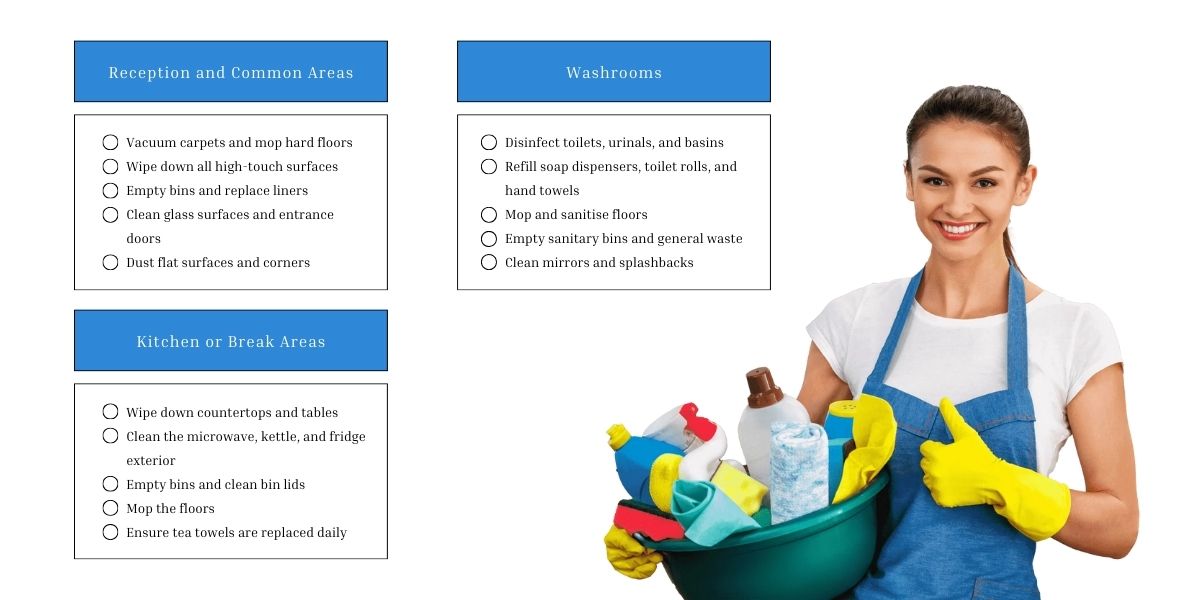
Reception and Common Areas
A tidy, well-maintained reception sets the tone for professionalism, while clean common areas promote comfort and safety throughout the workplace. Regular attention to these high-traffic zones helps create a welcoming and hygienic environment.
- Vacuum carpets and mop hard floors
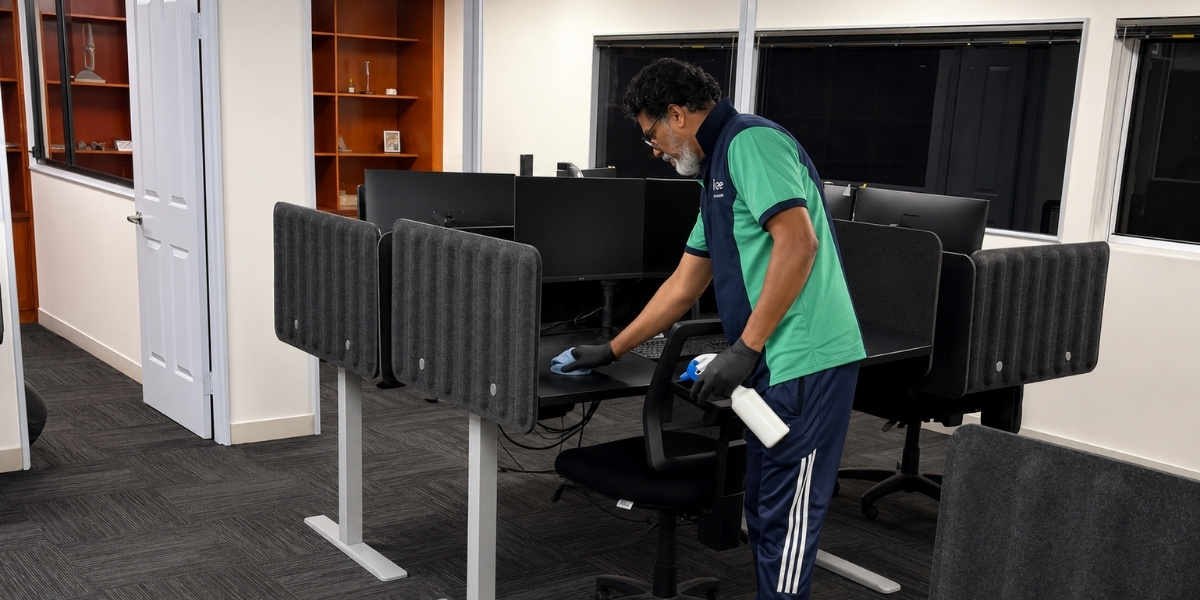
- Wipe down all high-touch surfaces (door handles, switches, desks)
- Empty bins and replace liners
- Clean glass surfaces and entrance doors
- Dust flat surfaces and corners
Washrooms
Maintaining clean and sanitised washrooms is critical for both hygiene and workplace comfort. These high-usage areas can quickly become breeding grounds for bacteria if not cleaned regularly and thoroughly. A well-kept washroom reflects care for employee well-being and leaves a positive impression on clients and visitors alike.
- Disinfect toilets, urinals, and basins
- Refill soap dispensers, toilet rolls, and hand towels
- Mop and sanitise floors
- Empty sanitary bins and general waste
- Clean mirrors and splashbacks
Kitchen or Break Areas
Usually, the most frequented spaces during the day, the kitchen and break areas, require consistent care to ensure cleanliness and prevent the spread of germs. As shared spaces where food is prepared and consumed, maintaining hygiene here not only supports employee health but also contributes to a pleasant and respectful work culture.
- Wipe down countertops and tables
- Clean the microwave, kettle, and fridge exterior
- Empty bins and clean bin lids
- Mop the floors
- Ensure tea towels or cloths are replaced daily
Weekly Commercial Cleaning Tasks
Some areas of a commercial space may not accumulate dirt or bacteria as quickly as high-traffic zones, but they still require routine care to maintain overall hygiene and appearance. While commercial cleaners address immediate cleanliness with daily tasks, certain surfaces and spaces benefit from more thorough attention at regular intervals. Typically, these are best handled weekly.
- Polish internal glass, mirrors, and partitions
- Dust blinds and high surfaces
- Clean behind and under furniture
- Sanitise desks and telephones
- Clean inside kitchen appliances (e.g. microwave, fridge)
Monthly or Periodic Cleaning Tasks
While daily and weekly cleaning routines maintain day-to-day hygiene, some tasks require less frequent but more intensive attention. Scheduled at regular intervals, typically on a monthly or quarterly basis, these tasks focus on deep cleaning areas that are often overlooked.
They help maintain long-term cleanliness, extend the lifespan, and support a consistently high standard of presentation. Incorporating these into your commercial cleaning schedule ensures your space not only looks clean but is also thoroughly maintained behind the scenes.
- Deep carpet cleaning or steam cleaning
- Wash windows (inside and out)
- Clean light fixtures and vents
- Strip and reseal hard floors if required
- Restock commercial cleaning products and inventory
Customising the Checklist for Your Business
Two businesses are not the same, and neither are their cleaning needs. A well-designed commercial cleaning checklist should be tailored to reflect the size, layout, industry regulations, and daily operations of a specific workspace.
For instance, the cleaning requirements of a corporate office differ significantly from those of a medical centre, retail store, or industrial warehouse. Each environment demands a unique focus, whether it's on high-touch areas, compliance with health protocols, or managing high foot traffic.
Effective customisation typically involves the following steps:
Initial Site Assessment
A professional site evaluation helps define the scope of cleaning needed. This involves reviewing the type of surfaces present, identifying high-touch or high-traffic zones, understanding how different areas are used throughout the day, and noting any special cleaning considerations. This step sets the foundation for a cleaning strategy that is both thorough and efficient.
Tailored Cleaning Schedule
Once the site is assessed, cleaning tasks can be prioritised and scheduled accordingly. High-use areas such as restrooms, kitchens, and reception zones may require daily attention, while tasks like window cleaning or air vent maintenance can be carried out weekly or monthly. This tailored approach ensures that resources are focused where they are needed most, avoiding both under-cleaning and unnecessary repetition.
Sector-Specific Cleaning Knowledge
Not all cleaners are trained for all industries. In sectors like healthcare, food services, or education, there are often strict hygiene and compliance guidelines that must be followed. Assigning a cleaning company in Sydney who are familiar with these requirements ensures that standards are upheld and that the cleaning process contributes to the overall safety and quality of the workplace.
Use of Appropriate Cleaning Products and Equipment
Customisation also involves selecting cleaning agents and tools that are suitable for the specific environment. For instance, anti-bacterial products may be prioritised in health settings, while eco-friendly cleaning products may be preferred in childcare centres or offices with sustainability goals.
Additionally, the use of specialised equipment for carpet extraction, floor polishing, or sanitisation contributes to more effective results.
Defined Roles and Clear Communication
A well-customised checklist assigns specific tasks to the appropriate personnel, ensuring accountability and reducing overlap. Transparent communication between business managers and cleaning teams allows expectations to be clearly set and monitored over time.
Ongoing Feedback and Performance Review
Customisation is not a one-time activity. As the business evolves whether through staff expansion, layout changes, or new services, cleaning needs may also shift. Regular reviews of cleaning performance and open feedback channels allow the checklist to adapt accordingly. This continuous improvement model helps maintain high standards while adjusting to the business's dynamic needs.
Frame a Checklist That Works for You
Maintaining a clean workspace isn't just about appearance; it’s about safety, productivity, and employee well-being. With the right commercial cleaning checklist, supported by trained commercial cleaners, you can ensure your workplace stays in top condition every day. At Hope Cleaning Services, we don’t just clean, we care. Whether you need a daily cleaner or a customised long-term cleaning plan, we’re here to support your business. Reach out today for a tailored cleaning quote.