The Complete Guide to Building Essential Commercial Cleaning Skills and Competencies
In Sydney’s commercial cleaning industry, what separates a great cleaner from an average one isn’t just hard work — it’s a specific set of skills, habits, and judgment calls developed on the job. Whether the site is a 200-desk office in Parramatta or a sprawling industrial warehouse in Silverwater, the day-to-day work demands far more than mopping and emptying bins.
Clients hire commercial cleaning services expecting consistent hygiene standards, discretion around confidential workspaces, and the right chemical knowledge to clean without damaging finishes. Building the right commercial cleaning skills takes time, structured training, and an understanding of where each skill applies. This guide walks through the core competencies every cleaning professional needs to thrive in roles across office cleaning, retail, healthcare, and industrial cleaning environments.
Core Technical Skills Every Commercial Cleaner Should Master
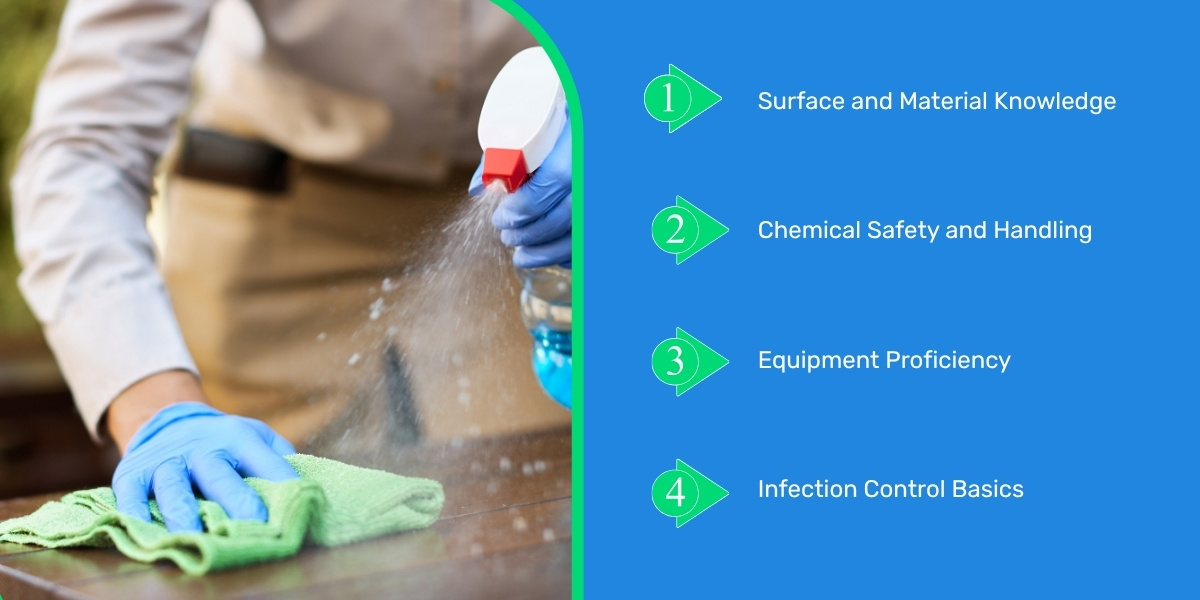
Surface and Material Knowledge
Different surfaces — porcelain tile, hardwood, vinyl, stainless steel, carpet — each demand a specific cleaning approach. A skilled cleaner identifies the surface, selects the right product, and applies the correct technique. Wrong choices ruin finishes and cost clients thousands of dollars in damage that wasn’t budgeted for.
Chemical Safety and Handling
Reading safety data sheets, diluting concentrates correctly, and avoiding dangerous mixes like bleach and ammonia are non-negotiable habits. Strong skills for commercial cleaning include understanding pH levels, contact times, and which products are safe to use near food preparation areas or sensitive electronics.
Equipment Proficiency
From microfibre systems to wet vacuums, floor buffers, and HEPA-filter machines, commercial cleaners need hands-on familiarity with the gear that gets the job done. Industrial cleaning sites push this further with pressure washers, ride-on scrubber-dryers, and scissor lifts for high-bay warehouses.
Infection Control Basics
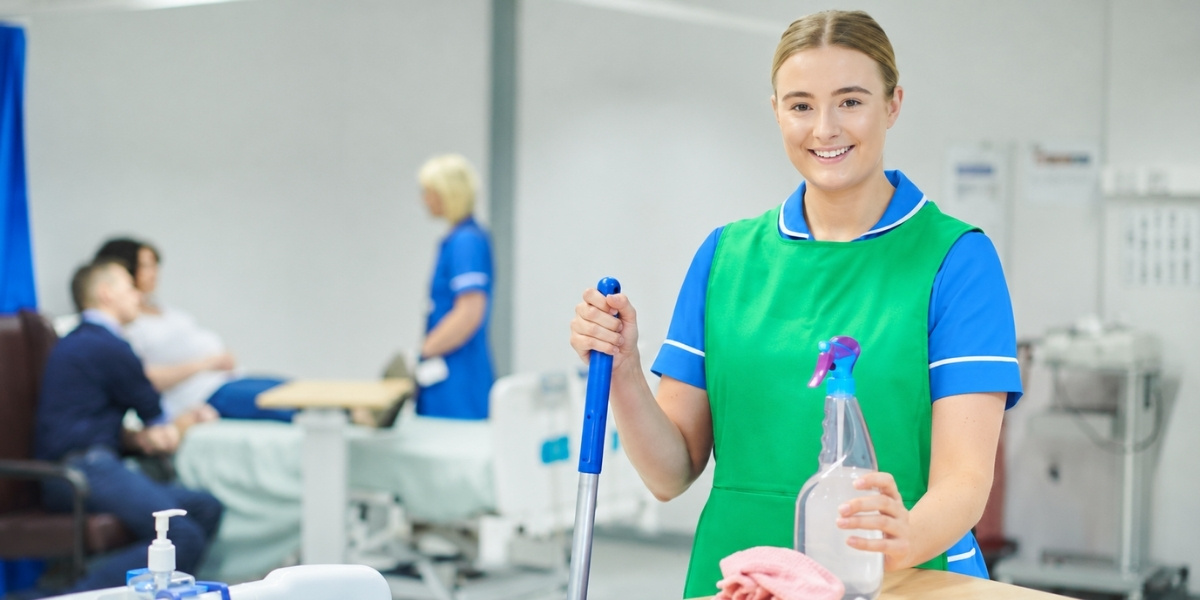
In medical, dental, childcare, and aged-care environments, cross-contamination prevention becomes a daily habit rather than a one-off training topic. Colour-coded cloths, single-pass cleaning, and proper PPE use form the foundation of safe practice.
Soft Skills That Set Top Cleaners Apart
Time Management
A site with eight hours of work compressed into a four-hour after-hours window punishes anyone who doesn’t plan a route. Top cleaners walk the floor in a defined order, group similar tasks together, and finish strong rather than rushed.
Attention to Detail
Skirting boards, behind toilet seats, the underside of door handles — these are the spots that separate a passing inspection from a failed one. Detail-minded cleaners notice what others miss, and clients quickly notice the difference.
Discretion and Professionalism
Cleaners often work alone in client premises after hours, around confidential documents and personal belongings. Trustworthiness, quiet movement, and respect for the space matter as much as the cleaning itself.
Communication
Reporting damage, flagging restock needs, leaving brief shift notes, and responding to client requests calmly — strong written and verbal communication keeps small problems from becoming complaints.
Specialist Competencies for Different Commercial Environments
Office and Corporate Spaces
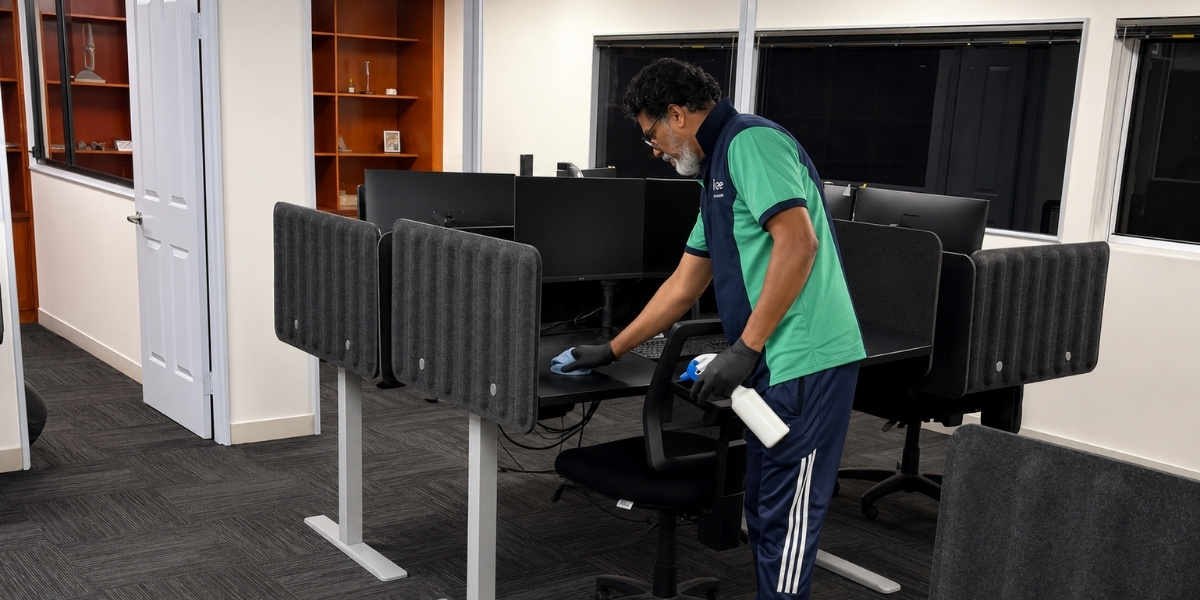
Office cleaning demands quiet efficiency: keyboards wiped without disconnecting cables, glass partitions left streak-free, kitchens cleared without disturbing personal items. Familiarity with hot-desking patterns and shared meeting room schedules helps a cleaner work invisibly around the building’s rhythm.
Industrial and Warehouse Sites
Competencies for industrial work cover oil spills, dust extraction in factories, forklift-path safety, and large-area floor scrubbing. Workers need WHS awareness on these sites — high-vis gear, hard hats in some zones, and proper lockout/tagout knowledge around moving machinery.
Retail, Medical, and Hospitality
Each vertical adds its own layer. Retail demands daytime cleaning that doesn’t disrupt customers, medical sites require terminal disinfection protocols, and hospitality venues need rapid turnaround between events. A flexible commercial cleaner shifts approach based on the setting.
Building Skills Through Training and On-Site Experience
Structured Onboarding
Quality providers like Hope Cleaning Services invest in induction programs covering chemical use, equipment handling, and site-specific procedures before a cleaner ever steps onto a client site alone. Shadowing experienced staff for the first few weeks accelerates real competence.
Ongoing Refreshers
Cleaning chemistry evolves. New eco-friendly products, updated WHS regulations, and changing client expectations mean skills need top-ups every few months. Toolbox talks, supplier demonstrations, and short video refreshers all keep teams sharp.
Site-Specific Learning
Every premises has its quirks — a fussy alarm system, a freight lift that needs a key, a tenant who insists on lemon-scented disinfectant only. Capturing these in shift notes builds a shared knowledge base that the whole team benefits from.
Self-Reflection and Feedback
The best cleaners ask supervisors for feedback, photograph their own work for review, and notice patterns in what gets flagged on QA audits. Improvement compounds quickly when someone is willing to learn from each shift.
Frequently Asked Questions
What are the most important commercial cleaning skills to develop first?
Surface and chemical knowledge come first — knowing what to use where prevents the most expensive mistakes. After that, time management and attention to detail are the two soft skills that pay off across every type of site, from offices in commercial cleaning Sydney networks to warehouses out west.
How long does it take to become competent in commercial cleaning?
Basic competence on a single site usually takes four to six weeks of supervised work. Becoming versatile across office, retail, medical, and industrial environments typically takes one to two years of varied site experience and continued training.
Do industrial roles need different qualifications than office cleaning roles?
Generally, yes — industrial work often requires additional WHS tickets, machinery operator certificates, and specific chemical handling training. Office cleaning is more accessible at the entry level, though strong fundamentals still apply across both settings.
Conclusion
Strong commercial cleaning work isn’t accidental. It is the result of layered technical knowledge, sharp soft skills, and the kind of judgment that only builds on the job. As Sydney’s premises grow more varied — from compact childcare centres to multi-tenant towers and large industrial estates — the demand for genuinely skilled cleaners keeps climbing, and Hope Cleaning Services continues to support businesses with dependable, high-quality commercial cleaning tailored to every workspace. For anyone building a career in this trade, or for businesses trying to understand what good cleaning looks like, the takeaway is the same: skills are the foundation, training is the multiplier, and consistent attention to detail is the standard that keeps clients coming back over the long run.