
The Complete Guide to Building an Effective Warehouse Cleaning Schedule in Sydney
Sydney’s warehouse sector keeps a huge slice of the local economy moving — from logistics hubs in Eastern Creek to cold-storage facilities in Banksmeadow and distribution centres in Silverwater. The bigger the operation, the harder it is to stay clean by reacting to mess as it appears. A planned, written schedule beats ad-hoc cleaning every single time.
A well-built warehouse cleaning schedule helps keep stock safe, workers protected, and forklift drivers moving without slipping on spilled product. It also keeps you on the right side of WHS audits and insurance reviews. Whether you manage cleaning in-house or bring in external warehouse cleaning support, this guide walks through how to design a schedule that actually works inside a busy Sydney warehouse.
Why a Strong Warehouse Cleaning Schedule Matters
Workplace Safety and WHS Compliance
Spilled lubricants, shrink-wrap offcuts, and broken pallets cause more warehouse injuries than most managers realise. A documented warehouse cleaning schedule directly supports your duty of care under the NSW Work Health and Safety Act 2011. When inspectors arrive, written cleaning routines and signed-off completion logs are some of the first records they ask to see.
Inventory Protection
Dust, moisture, and pest activity all silently degrade stored stock. Dust on packaging looks unprofessional when an order is delivered, and damp corners encourage mould on cardboard. A scheduled clean catches these conditions before they cost you in damaged inventory or warranty claims.
Operational Efficiency
A clean warehouse moves faster. Clear aisles let pickers walk straight lines, organised bins reduce errors, and uncluttered loading docks speed up truck turnaround. Time saved on the floor compounds across hundreds of picks per shift.
Equipment Lifespan
Forklift wheels, conveyor rollers, and pallet jacks all wear faster when the floor is covered in grit. HVAC units pulling dust through unfiltered ducting fail earlier. Regular cleaning keeps capital equipment running longer between expensive servicing intervals.
How to Build a Warehouse Cleaning Schedule From Scratch
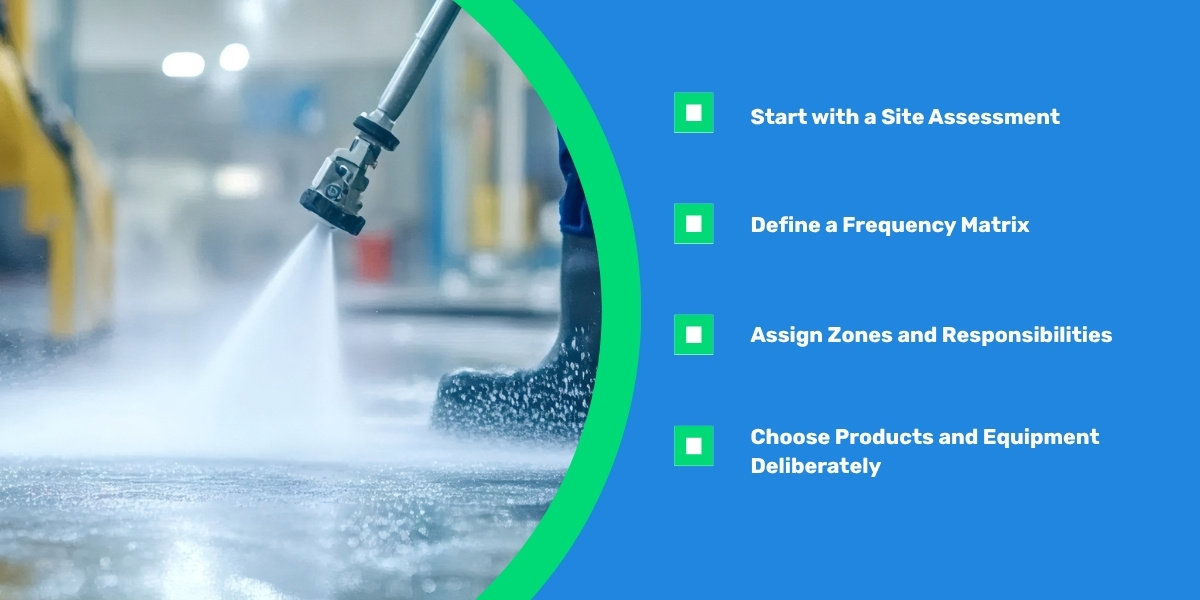
Start with a Site Assessment
Walk the entire facility with your operations lead, a senior picker, and ideally an experienced commercial cleaner. Map the high-traffic zones, identify the spots that get missed — under racking, behind bunkers, around battery bays — and note specialist surfaces or stored chemicals that need particular handling.
Define a Frequency Matrix
Group tasks into daily, weekly, monthly, and quarterly buckets. Daily covers spill response, dock sweeping, and amenities; weekly covers main aisle scrubs and rack-front wipe-downs; monthly tackles ceiling fans and deeper zone cleans; quarterly handles high-level dusting, gutter clearing, and lighting fixtures.
Assign Zones and Responsibilities
Break the floor plan into named zones — Receiving, Pick Face, Bulk Storage, Dispatch, Battery Bay, Amenities — and allocate each to a specific person or cleaning shift. Zone ownership reduces the “someone else will do it” problem that quietly destroys inconsistent cleaning programs.
Choose Products and Equipment Deliberately
The right gear depends on the floor (sealed concrete versus epoxy), the goods stored (food-grade requires different chemicals than general freight), and the working environment. Ride-on scrubbers, microfibre flat mops, and pH-neutral degreasers are common starting points for general dry-goods warehouses.
Daily, Weekly, and Periodic Tasks for Sydney Warehouses
Daily Floor and Spill Management
Sweep main aisles once or twice per shift, react to spills within minutes, and empty bins at the end of every operating day. Spill response is the most underrated task — a small lubricant patch becomes a slip claim if it sits for an hour.
Weekly Detailed Cleaning
Run a ride-on scrubber across main aisles, wipe rack uprights to shoulder height, clean amenities thoroughly, and check first-aid stations. Light fittings within reach should also be dusted to maintain the illumination levels required for safe picking.
Monthly and Quarterly Deep Work
Schedule pressure-washing of loading docks, high-level dusting of beams and lights, gutter clearing before storm season, and inspection cleans of HVAC vents. Most warehouse cleaning in Sydney programs reserve these jobs for low-volume Sundays or planned shutdown days.
Sydney-Specific Considerations and Provider Coordination
Climate and Coastal Conditions
Warehouses near the coast — Botany, Banksmeadow, Port Botany — deal with salt-laden air that corrodes steel racking faster than inland sites. Schedules in these locations should include more frequent metal-surface wipe-downs and ventilation checks. Western Sydney warehouses near construction corridors collect more airborne dust, so daily floor work and high-level dusting become more important.
Operational Hours and Industrial Cleaning Demands
Sydney warehouse operations rarely stop. A schedule that ignores actual shift patterns ends up unfollowed. Most industrial cleaning providers run their warehouse work between 10 pm and 5 am or during single-shift gaps — close coordination with the operations team is non-negotiable. Heavier tasks like machine residue removal and chemical decontamination usually need separate scheduling.
Working with an External Provider
When engaging external cleaners, document the schedule, inclusions, response times for spills, and inspection method. Providers like Hope Cleaning Services typically include shift logs, photo evidence of high-risk zones, and incident notes in standard reporting. Most commercial cleaning Sydney teams also review the schedule each quarter as stock profiles and racking change.
Frequently Asked Questions
How often should a Sydney warehouse be cleaned?
Most active Sydney warehouses need daily floor and amenity cleaning, weekly detailed cleaning, monthly deep tasks, and quarterly high-level work. The exact frequency depends on throughput, product type, and footprint — a 5,000 sqm cold-storage site needs a very different schedule from a 1,500 sqm dry-goods unit.
What separates warehouse cleaning from industrial cleaning?
Industrial cleaning often refers to heavy-duty work like machine cleaning, oil and grease removal, and chemical residue handling. Warehouse cleaning sits inside the broader industrial category but focuses more on floor management, racking, dock areas, and amenities used by warehouse staff.
Can a warehouse cleaning schedule be paused during stocktake or peak season?
Pausing is rarely a good idea — peak season usually creates more mess, not less. Most operations modify the schedule instead, focusing on safety-critical tasks during peak weeks and catching up on deep work immediately afterwards.
Conclusion
A well-built warehouse cleaning schedule isn’t a glossy checklist on the wall — it is a working document tied to real shift patterns, real zones, and real WHS obligations. The warehouses that run cleanest in Sydney are usually the ones where companies like Hope Cleaning Services make the cleaning routine part of how the building thinks, not an afterthought delegated to whoever has spare time. For any operations leader inheriting a messy facility, the takeaway is straightforward. Walk the site, write the schedule, assign the zones, and review every quarter. Productivity gains, fewer injury claims, and cleaner audits tend to follow.