The Emergency Cleaning Process: A Step-by-Step Professional Guide for Sydney Facilities
Emergency cleaning is the work nobody schedules, but everyone eventually needs. A burst pipe in a server room at 2 am, a sewage backflow into a retail toilet during trading hours, a biohazard spill in an ICU bay — these incidents don’t wait. They need a trained crew on site fast.
This guide walks through the professional emergency cleaning process step by step, covering the call-out, the assessment, the actual clean, and the handover. It applies whether the affected site is a CBD office, a Western Sydney warehouse, a healthcare facility, or anywhere in between. Knowing what a competent provider should do — and in what order — separates a quick recovery from a costly one.
When Emergency Cleaning Is Actually Needed
Most call-outs fall into a small set of high-urgency scenarios. The common triggers include
- Water damage from burst pipes, roof leaks, or sprinkler discharge
- Sewage overflows or grease trap failures
- Biohazard cleanup, including blood, bodily fluids, or unattended deaths
- Post-fire residue, soot, and smoke odour removal
- Chemical spills in industrial or retail environments
- Crime scene or trauma cleaning after police clearance
- Pest infestation cleanup, including rodent droppings
- Storm and flood damage in basements, lobbies, and loading docks
Each has its own protocol, but the backbone is the same — assess fast, contain the spread, decontaminate properly, document everything.
The Step-by-Step Emergency Cleaning Process
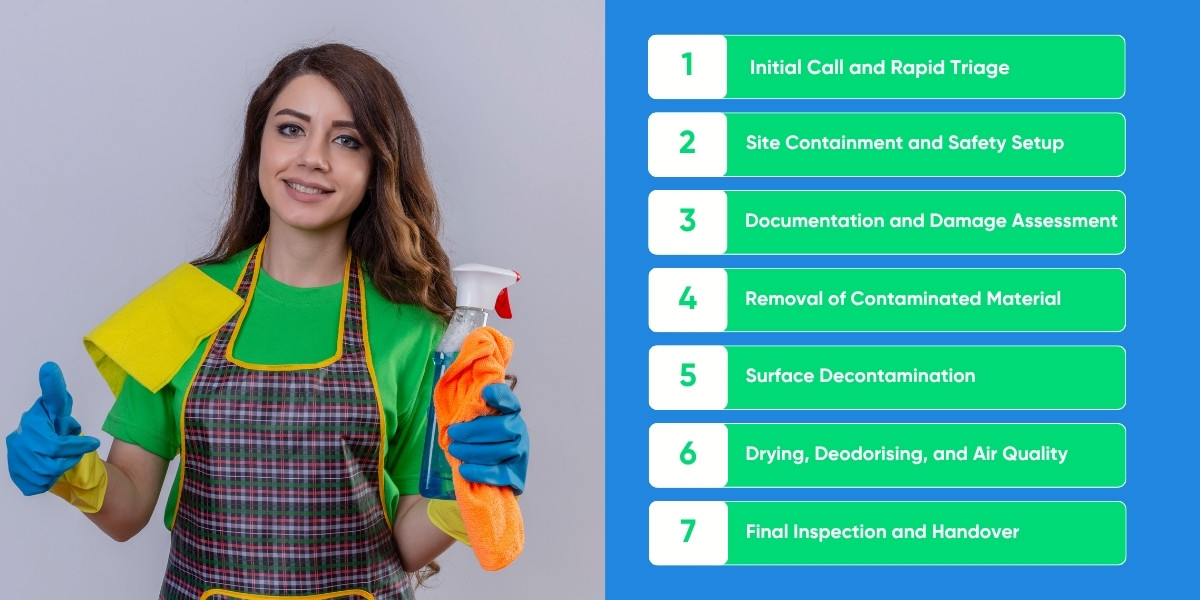
Step 1 — Initial Call and Rapid Triage
The clock starts the moment a call comes in. A professional provider asks short triage questions: what happened, when, the size of the affected area, whether occupants are still in the space, and whether utilities are isolated. Crew size and ETA follow immediately.
Step 2 — Site Containment and Safety Setup
On arrival, the first task isn’t cleaning — it is containment. Crews mark off the affected zone, post warning signage, lay barriers, and confirm power and water are isolated. PPE goes on before anyone enters the contaminated area, and air handling systems are shut down where cross-contamination is a risk.
Step 3 — Documentation and Damage Assessment
Before cleaning begins, the team photographs and logs the damage for insurance and audit purposes. The assessment captures
- Extent and depth of contamination
- Affected materials (hard surfaces, carpet, soft furnishings, electronics)
- Health hazards present (sharps, mould spores, chemical residues)
- Equipment required (extraction units, HEPA vacuums, ozone generators)
Step 4 — Removal of Contaminated Material
Standing water is extracted. Damaged porous materials — saturated carpet underlay, contaminated insulation, ruined ceiling tiles — are removed and bagged for disposal. Sharps and biohazardous waste go into rigid containers. Anything that can’t be properly decontaminated leaves the building first.
Step 5 — Surface Decontamination
With debris cleared, the team moves to surface cleaning. Chemicals depend on contamination type: hospital-grade disinfectants for biohazards, enzymatic cleaners for organic residues, neutralisers for chemical spills. Each surface gets the right product, the correct dilution, and proper dwell time.
Step 6 — Drying, Deodorising, and Air Quality
Wet incidents need aggressive drying — industrial dehumidifiers and air movers run continuously until moisture readings return to baseline. Smoke and odour incidents need air scrubbers and ozone treatment. This stage often runs 24 to 72 hours, depending on the scope.
Step 7 — Final Inspection and Handover
Once the area is dry and clean, the team performs a final walk-through with the site manager, signs off the work, and provides a written report including photos, products used, waste disposal records, and any follow-up recommendations. This documentation is critical for insurance and compliance.
How the Process Adapts by Sector
Office Emergencies
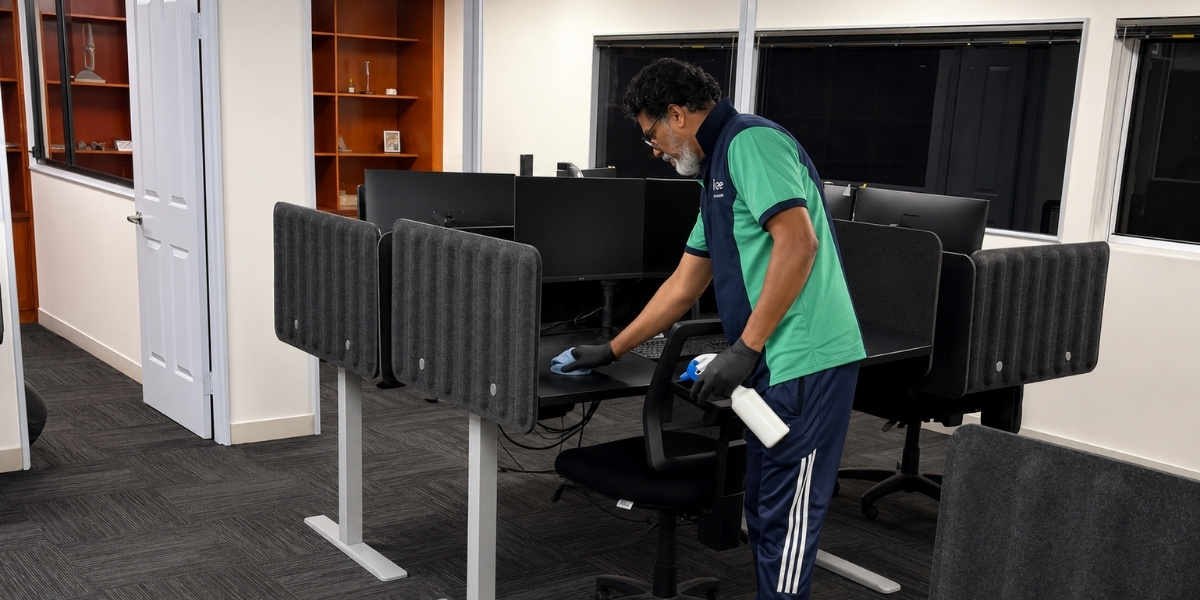
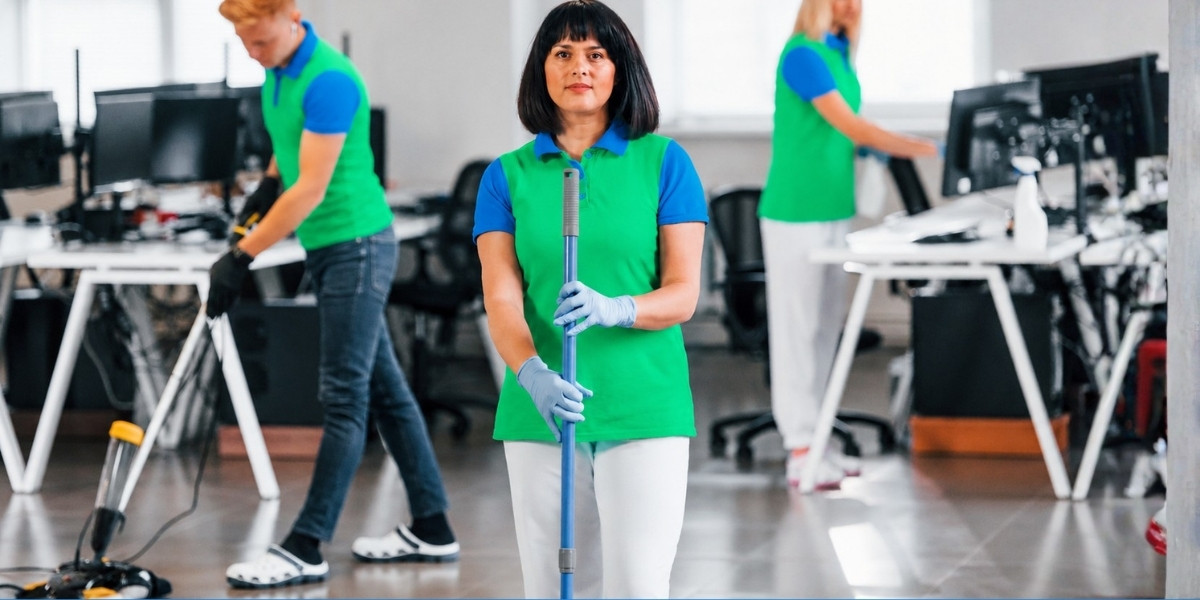
For office cleaning emergencies, the priority is restoring workspace habitability with minimum business disruption. Common scenarios — leaks above ceiling tiles, kitchen flooding, after-hours vandalism — usually allow work to continue in unaffected zones while the team isolates and treats the impacted area.
Warehouse Emergencies
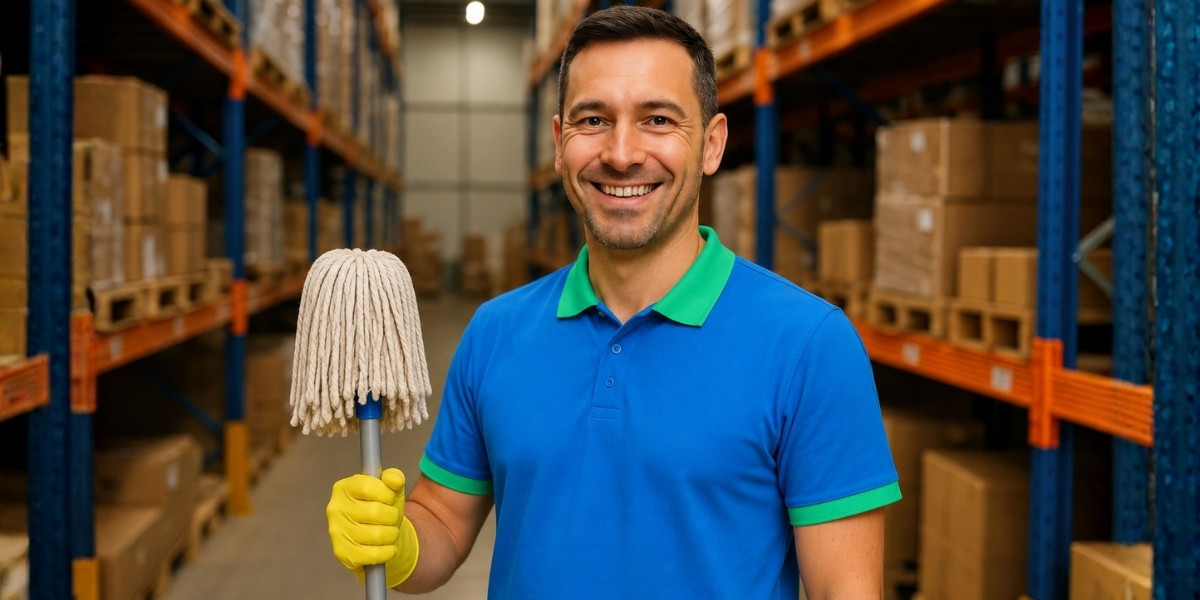
Emergency warehouse cleaning often involves larger volumes and higher safety stakes. Hydraulic fluid spills from forklifts, sprinkler discharges over palletised stock, and pest infestations in storage zones need rapid containment to avoid stock contamination claims and WHS issues with the wider workforce.
Hospital and Healthcare Settings
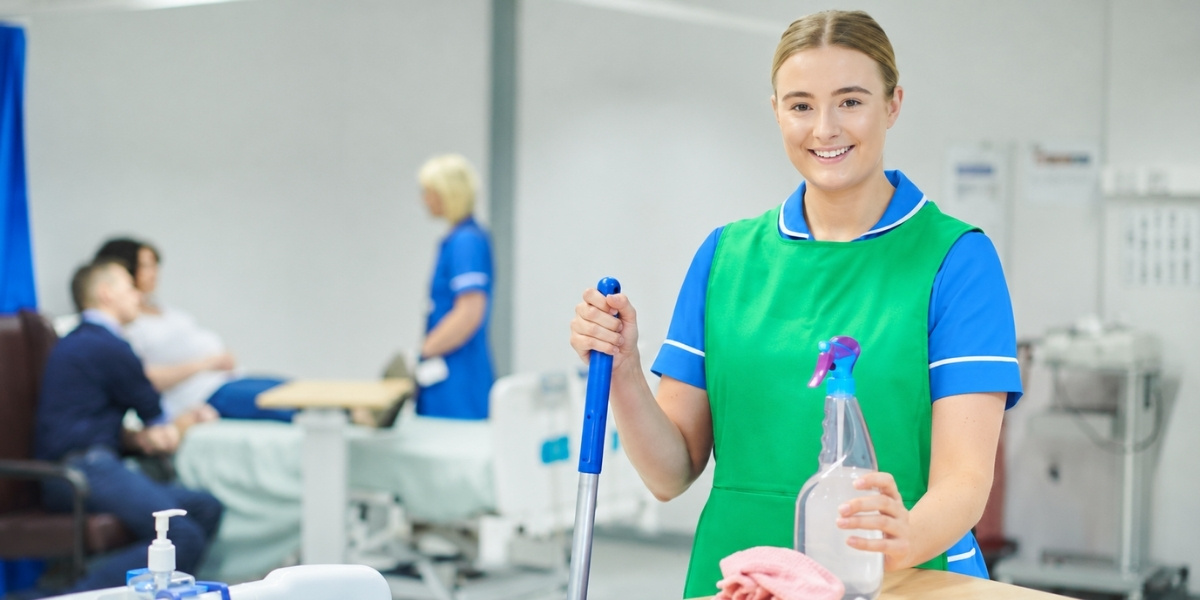
Emergency hospital cleaning is the most tightly regulated of the lot. Terminal cleans after infectious cases, blood spills in treatment bays, and sharps incidents all follow strict IPC protocols. Crews working in these environments need specific training, chemical knowledge, and documentation discipline above what a general commercial team carries.
What to Look For When Choosing a Provider
Picking the right team before an emergency happens saves hours when one does. Key criteria worth checking in advance
- 24/7 genuine availability with documented response times
- Trained technicians with biohazard, IICRC, or equivalent certifications
- Industrial-grade extraction, drying, and air scrubbing equipment on hand
- Insurance liaison experience and proper claim documentation
- Sector-specific experience matching your site type
- Transparent reporting and post-incident recommendations
Established Sydney providers like Hope Cleaning Services build these capabilities into their standard commercial cleaning services offer rather than treating emergency response as a separate specialty.
Frequently Asked Questions
How fast should an emergency cleaning provider respond?
Reputable emergency cleaning services Sydney teams aim for arrival within 1 to 2 hours in metropolitan zones for high-priority incidents, with longer windows for outer suburbs. Genuine 24/7 availability — including weekends and public holidays — is non-negotiable for any provider claiming emergency capability.
Do emergency cleans require special insurance or certifications?
Yes. Cleaning crews handling biohazards, chemicals, or fire-damaged sites need specialised training, along with proper public liability and professional indemnity insurance coverage. Most commercial emergency cleaning services contracts also require formal incident documentation suitable for insurer review.
Can emergency cleaning include carpet cleaning and restoration?
Absolutely. Water damage and biohazard incidents often involve carpet cleaning, extraction, and restoration as part of the broader scope. The decision between cleaning and replacing depends on contamination type, dwell time, and the underlying padding condition — a qualified technician makes that call during the assessment step.
Conclusion
Emergency cleaning runs on speed, training, and discipline. A clear process — assess, contain, document, remove, decontaminate, dry, hand over — keeps the work safe and the records defensible. Skipping a step or rushing the order is how small incidents become larger, more expensive ones.
For any site manager or operations lead, the best emergency cleaning relationship is one set up with Hope Cleaning Services long before it is needed. Walk the building with a provider, agree on the documentation standard, and the next 2 am phone call becomes a managed incident rather than a crisis.