
Why Commercial Cleaning Genuinely Matters for Sydney Offices in 2026
Walk through any half-empty co-working space at 7 pm on a Friday, and you can tell within seconds how seriously the operator takes cleaning. Carpet stains in the breakout zone, dust on the meeting room AV gear, a faint kitchen smell drifting toward the lifts — these aren’t aesthetic complaints. They are signals that quietly shape how staff, clients, and prospective tenants feel about the space.
For Sydney office occupiers and building managers, the importance of commercial cleaning in offices is genuinely operational, not cosmetic. Clean offices retain staff, attract clients, protect property assets, and reduce legal exposure. This piece makes the honest business case for professional cleaning — what it actually delivers, where neglected programs cost real money, and what good looks like in a modern Sydney building.
The Real Cost of Skipping or Skimping
It is tempting to treat cleaning as a budget line that flexes with quarterly pressure. The trouble is that the costs of going light are invisible until they aren’t. The importance of commercial cleaning in keeping sick days down, equipment lasting longer, and reputation intact only becomes obvious when one of those breaks publicly. By then, the savings are already gone, several times over, in churned staff and lost prospects.
What Strong Commercial Cleaning Actually Delivers
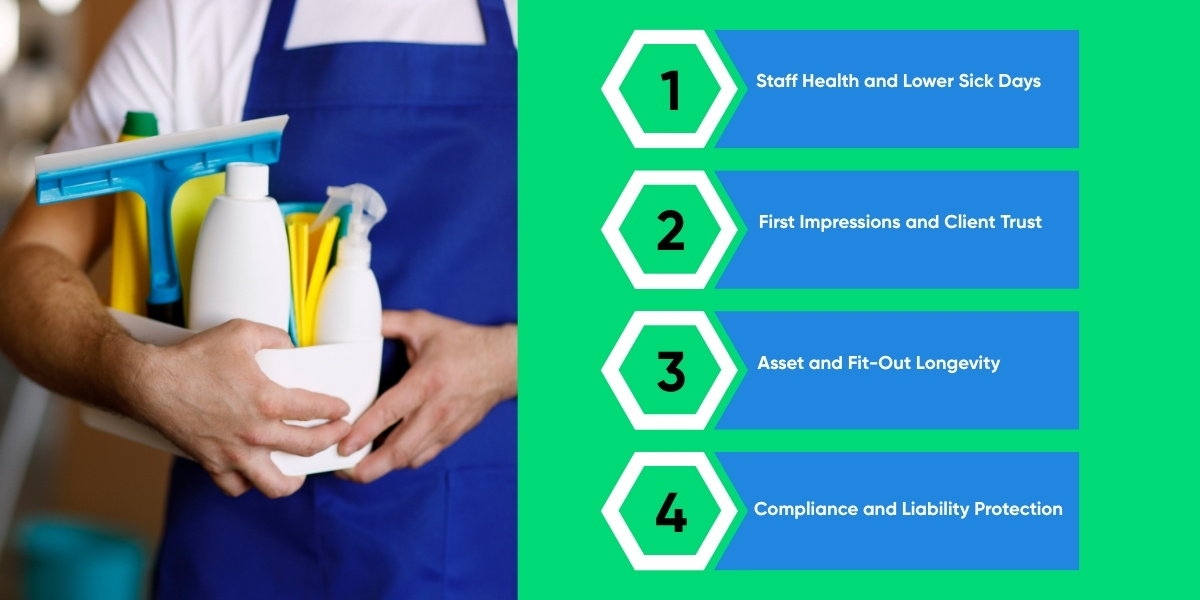
Staff Health and Lower Sick Days
Shared keyboards, lift buttons, kitchen surfaces, and meeting room tables are vectors for everything from common colds through gastro to influenza. Studies of Australian workplaces consistently show that regular disinfection of high-touch surfaces cuts absenteeism noticeably during winter months. The numbers add up quickly across a workforce of 100 or more.
First Impressions and Client Trust
First-time visitors notice everything during their first 90 seconds in your reception. A streaked glass entrance, smudged signage, or a tired carpet sends a message before anyone has shaken hands. Regular window cleaning, polished floors, and presentable amenities don’t win contracts on their own — but they remove a category of subconscious doubt that costs deals.
Asset and Fit-Out Longevity
Carpet replacement, blind cleaning, painted-wall touch-ups, and furniture re-upholstery all cost meaningfully more than the cleaning that would have preserved them. Commercial fit-outs typically run between $1,200 and $2,500 per square metre in Sydney. Cleaning is the cheapest insurance against having to redo any of it ahead of schedule.
Compliance and Liability Protection
Slip-trip claims, food safety incidents in shared kitchens, and indoor air quality complaints all carry real legal weight under NSW workplace law. Documented cleaning records — frequency logs, products used, signed inspections — form the spine of any defence if something goes wrong on the floor.
Why Sydney Offices Have Their Own Specific
Demands Density and Building Stock
Sydney’s office stock spans 1980s towers in the CBD, refurbished warehouses in Surry Hills, and modern flexible-floor buildings in Barangaroo. Each has different cleaning needs — older buildings demand more dust management, glass-heavy newer ones need more frequent window work, and shared atriums need careful daytime cleaning that doesn’t disrupt occupants.
Climate and Outdoor Factors
Sydney’s combination of coastal humidity, occasional dust events from the west, and storm-season rainfall puts particular pressure on entry mats, glass facades, and carpet edges nearest doors. Cleaning schedules that ignore weather realities end up reactive — chasing problems rather than preventing them.
Lease and Sub-Tenant Expectations
Multi-tenanted buildings increasingly include cleaning standards in lease agreements, with quarterly inspections and remediation clauses. A strong Sydney office cleaning program protects landlord-tenant relationships and prevents the small disputes that escalate into formal complaints when one tenant feels the building is being neglected.
Beyond the Average: What Makes a Provider Truly Strong
Consistency Over Headline Promises
The best providers deliver the same standard on shift 50 as they did on shift 1. Marketing brochures look impressive at the tender stage; the actual measure is whether the bin near the printer is consistently emptied at 7 am every Tuesday. Office cleaning quality is built shift by shift, not pitched in proposals.
Communication and Reporting
Strong providers like Hope Cleaning Services offer monthly reports, shift logs, and incident notes as standard contract inclusions. Facility managers should never have to chase information about whether something was done — it should be visible by default.
Site-Specific Training
A cleaner who knows your building — its alarm quirks, its tenant preferences, the meeting rooms that need extra care before board day — delivers better results than a rotating crew that treats every site identically. Provider stability and named staff matter more than brand recognition.
Frequently Asked Questions
How often should a Sydney office be professionally cleaned?
Most offices run a daily routine for desks, kitchens, and amenities, with weekly carpet care, monthly deep cleaning of upholstery and high points, and quarterly window work. The frequency scales with headcount and visitor traffic — a 200-staff office with 30 daily visitors needs more attention than a 30-staff backroom operation.
Is in-house cleaning a viable alternative to outsourcing?
Some larger sites run hybrid models, but pure in-house cleaning rarely matches a professional contract for cost, equipment access, and coverage flexibility. Hiring full-time cleaners with leave, insurance, and equipment usually ends up 20 to 40% more expensive than a comparable commercial contract.
Does commercial cleaning include specialised work like windows and carpets?
Most full-service providers include these as scheduled add-ons or offer them on a periodic-task basis. External window work is typically quarterly for general offices and monthly for high-traffic ground-floor frontages. Carpet cleaning runs twice a year for most offices, more often for client-facing zones.
Conclusion
Commercial cleaning in a Sydney office isn’t a back-office detail—it is woven into the experience of every person who walks through your door. Hope Cleaning Services treats every clean as a strategic upgrade, offering the quickest way to lift your workplace’s quality and ambience without the need for a costly renovation.
For any operations leader trying to make the case internally, the framing is simple. Cleaning protects three things at once — people, property, and reputation. Every dollar spent well on it returns multiples over a year. Every dollar shaved off tends to surface later, somewhere more expensive.