A Practical Guide to Safer, Greener School Cleaning
Schools are high-traffic environments where hundreds of students, teachers, and staff share confined spaces every day. The cleaning products used directly impact indoor air quality, student well-being, and long-term health. However, many schools still rely on conventional chemicals containing harsh irritants and volatile organic compounds. Switching to eco-friendly school cleaning services is a practical step toward healthier classrooms, reducing exposure to harmful substances while supporting safer, more sustainable cleaning routines.
Why Conventional Cleaning Products Are a Problem in Schools
Most traditional school cleaning products are formulated for maximum germ-killing strength. While that sounds appealing, the chemical cocktail required to achieve it often creates more problems than it solves in an educational setting.
Chemical Exposure Risks for Young Students
Their bodies are still developing, they breathe faster relative to their size, and they frequently touch surfaces and then put their hands near their faces. Products containing bleach, ammonia, or phthalates leave residues on desks, door handles, and bathroom fixtures that students come into contact with throughout the day. Prolonged exposure to these residues has been linked to skin irritation, respiratory issues, and hormonal disruption in growing children.
Indoor Air Quality Deterioration
Volatile organic compounds released by conventional sprays and disinfectants linger in poorly ventilated classrooms for hours after cleaning. Studies conducted in Australian schools have shown that indoor air pollutant levels can be two to five times higher than outdoor levels when chemical-based products are used regularly. Poor indoor air quality contributes to headaches, fatigue, and reduced concentration — all of which undermine the learning environment that school cleaning is supposed to support.
Aggravating Allergies and Asthma
Australia has one of the highest rates of childhood asthma in the world. Fragrance-laden cleaning products and aerosol disinfectants are known triggers for asthmatic episodes and allergic reactions. When these products are used in classrooms, libraries, and gymnasiums, sensitive students can experience flare-ups that force them to miss class or visit the school nurse. Replacing these triggers with low-irritant, fragrance-free alternatives is one of the most effective ways to reduce absenteeism linked to respiratory complaints.
What Makes a Cleaning Product Genuinely Eco-Friendly?
The term “eco-friendly” is used loosely in marketing, so it pays to know what genuinely separates eco-friendly cleaning products for schools from products that simply carry a green label.
Certifications Worth Looking For
Reputable third-party certifications take the guesswork out of product selection. In Australia, Good Environmental Choice Australia (GECA) is the most widely recognised ecolabel for cleaning products. Internationally, look for products carrying the EU Ecolabel or Green Seal certification. These programmes assess the full lifecycle of a product, from raw material sourcing through to biodegradability after disposal. A certified product has been independently verified to meet strict environmental and health criteria that generic marketing claims cannot guarantee.
Ingredients to Avoid
When evaluating eco-friendly school cleaning products, check the safety data sheet for known problem chemicals. Triclosan, sodium hypochlorite, 2-butoxyethanol, and synthetic fragrances should all raise red flags. These ingredients persist on surfaces, resist biodegradation, and have documented health risks. Plant-derived surfactants, citric acid-based descalers, and hydrogen peroxide-based sanitisers offer effective alternatives without the toxicological concerns.
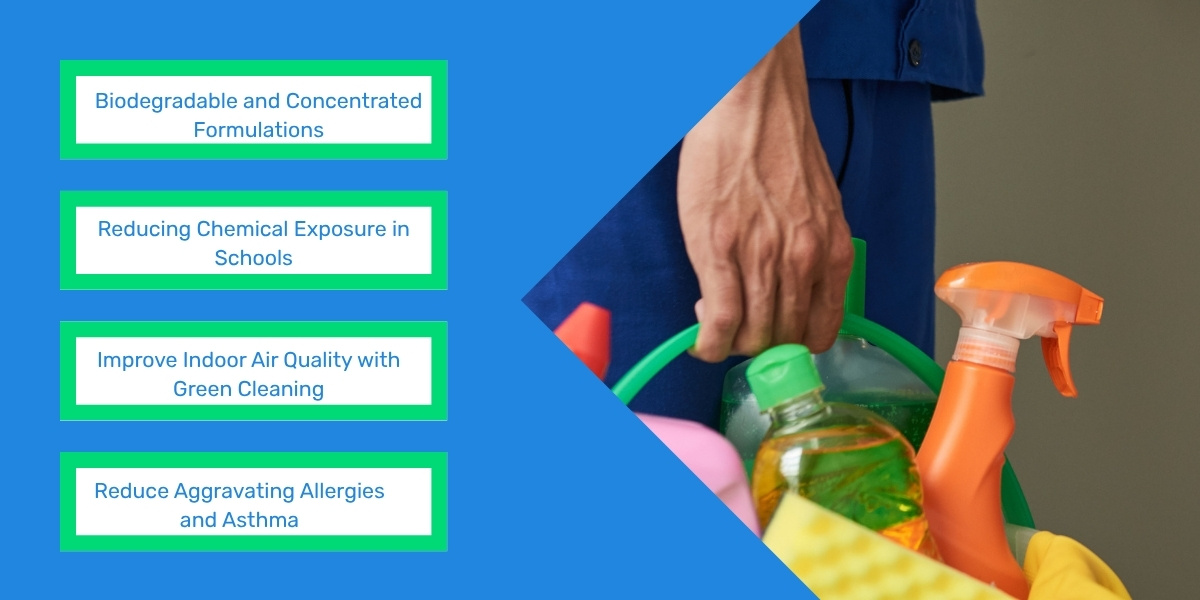
Biodegradable and Concentrated Formulations
Truly green products break down safely in waterways without harming aquatic ecosystems. Biodegradable formulations are particularly important for schools located near sensitive catchment areas. Concentrated products offer an additional environmental advantage by reducing plastic packaging waste and transport emissions. A single five-litre concentrate can replace dozens of pre-mixed spray bottles, which significantly reduces procurement costs for schools operating on tight budgets. Many commercial cleaning services now stock concentrated, eco-friendly ranges as standard.
Implementing Green Cleaning Practices in Schools
Transitioning to eco-friendly cleaning products for schools does not require an overnight overhaul. A staged approach produces better results and avoids disruption.
Partnering with Professional Cleaning Providers
Schools that outsource cleaning to professional school cleaning services should ask their provider about the products used on-site. A reputable provider will be transparent about their product range and willing to switch to certified alternatives on request. Teams such as Hope Cleaning Services integrate green commercial cleaning practices into their routines as standard, ensuring that classrooms are cleaned effectively without compromising student health.
Switching Products Gradually
Rather than replacing every product at once, start with the areas where students spend the most time. Classrooms, libraries, and canteens are the logical starting points. Swap surface sprays and glass cleaners first, as these are used most frequently and produce the highest levels of airborne residue. Bathroom disinfectants and floor cleaners can follow in the next phase. This staged transition allows cleaning staff to adjust their routines and confirm that the new products deliver the required performance before a full rollout.
Training Staff on Green Cleaning Methods
Eco-friendly products sometimes require different dilution ratios or application techniques compared to conventional chemicals. Providing cleaning staff with clear instructions and hands-on training ensures the products are used correctly, which directly affects their effectiveness. Training should also cover proper storage, labelling, and disposal procedures. When staff understand the reasoning behind the switch — protecting student health and meeting environmental standards — they are far more likely to embrace the change and maintain consistent cleaning quality across the school.
Frequently Asked Questions
Are eco-friendly cleaning approaches as effective as conventional methods in schools?
Yes, when used correctly. Eco-friendly cleaning methods use certified products that are rigorously tested and proven to eliminate common school pathogens like influenza, norovirus, and staphylococcus, while avoiding harsh chemical residues found in conventional cleaners.
Do green cleaning products cost more than standard options?
The upfront cost per unit can be slightly higher, but concentrated formulations offset this difference significantly. A single concentrate bottle replaces multiple ready-to-use sprays, reducing both product spend and waste disposal costs over the school year. Many schools find that the total cost of ownership is comparable or even lower once packaging, shipping, and storage savings are factored in.
How can a school verify that its cleaning provider uses genuinely eco-friendly products?
Request the product safety data sheets and check for third-party certifications such as GECA, Green Seal, or EU Ecolabel. A credible commercial cleaning services provider will readily share this documentation and explain how each product aligns with environmental and health standards.
Conclusion
Schools are high-traffic environments where hundreds of students, teachers, and staff share confined spaces every day. The cleaning products used directly impact indoor air quality, student well-being, and long-term health. However, many schools still rely on conventional chemicals containing harsh irritants and volatile organic compounds. Switching to eco-friendly school cleaning services from brands like Hope Cleaning Services is a practical step toward healthier classrooms, reducing exposure to harmful substances while supporting safer, more sustainable cleaning routines.