Warehouse Cleaning Checklist: A Step-by-Step Guide
Clean floors move stock faster, cut injuries, and protect your margin. Trouble is, warehouses fight you: high ceilings, forklifts grinding grime into the slab, drifting dust, and stock that never stops moving. Without a system, cleaning goes reactive, and half of it gets forgotten. A solid warehouse cleaning checklist breaks the job into small, repeatable steps your crew can knock out every shift, so nothing slips through the cracks when the floor gets busy.
This guide walks you through a warehouse cleaning checklist for daily, weekly, and periodic work. Run it in-house, or hand the heavy lifting to professional industrial cleaning services. Either way, the payoff is the same: a space that stays hygienic, organised, and compliant. Treat the lists below as a starting template, then tighten them around your own layout, stock, and shift pattern.
Why a Warehouse Cleaning Checklist Matters
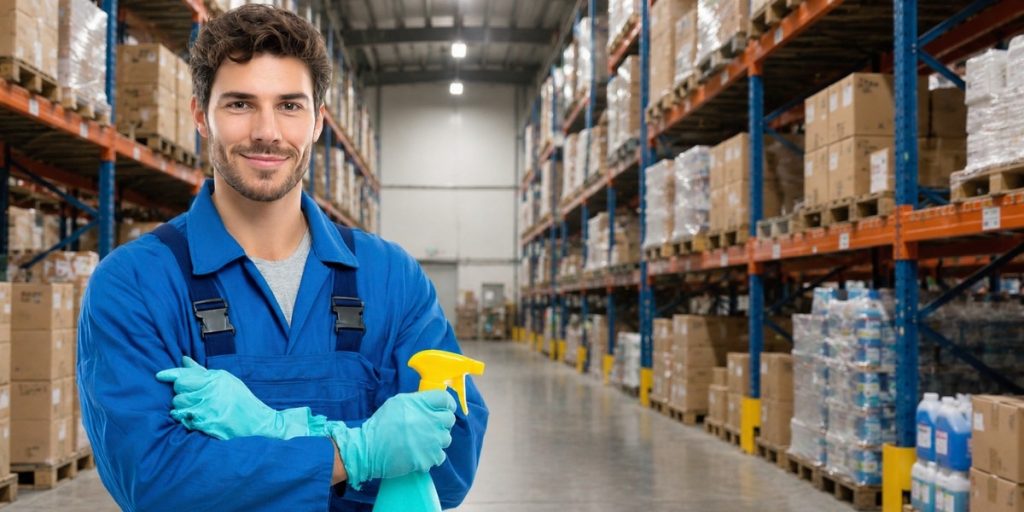
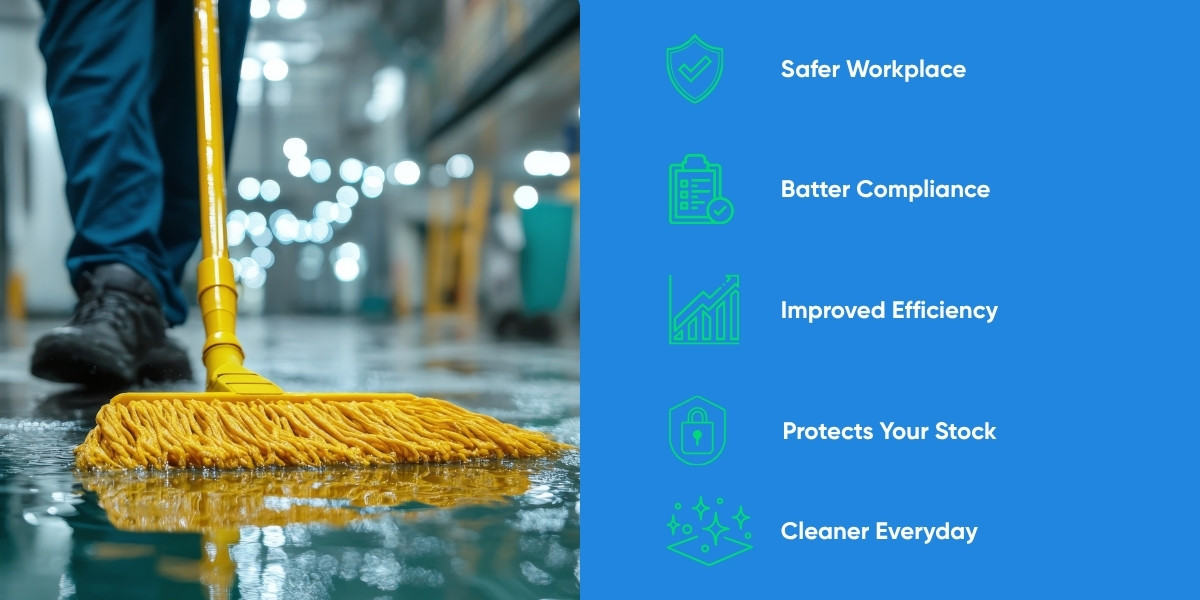
A warehouse is not an office, and you can't clean it like one. Forklifts drag muck across the slab, packaging sheds debris, and dust settles on racking above head height. A cleaning checklist for warehouses puts order to that chaos, and it pays you back in four ways.
- Safety: clean floors and clear aisles, cut slips, trips, and forklift incidents.
- Compliance: consistent cleaning backs up your workplace health and safety duties.
- Efficiency: a tidy space speeds up picking, packing, and stock control.
- Stock protection: ignore dust and pests, and they'll wreck your inventory.
There's a quieter benefit, too. A written checklist nails down who owns what and when it was last done, so nobody's guessing whose job the loading dock was. It also turns cleaning into something you can measure. When a near-miss gets traced back to a missed task, the record tells you exactly where the system broke.
Daily Warehouse Cleaning Tasks
Daily cleaning stops a small mess from becoming a big one. Run these every shift, or before the lights go off. This is the backbone of any warehouse cleaning checklist, and it's the part your own crew can realistically own.
- Sweep or scrub floors in high-traffic zones, cleaning dust, debris, and spills.
- Clear aisles and walkways. Move pallets, packaging, and stray stock.
- Empty bins and haul rubbish to the designated waste areas. • Wipe high-touch points: door handles, control panels, shared equipment.
- Hit spills the moment they happen, and drop hazard signage where needed.
- Reset packing stations and put tools and equipment back where they belong.
Lock that in, and you've got a baseline that makes every deeper clean faster. A practical tip: tie daily cleaning to your shift handover. The crew clocking off does a fifteen-minute sweep of their zone before they leave, so the next shift walks into a clean floor. Cardboard and shrink wrap are the usual culprits, so put a baler or dedicated skip near packing.
Weekly Warehouse Cleaning Tasks
Weekly work clears the build-up, daily cleaning skips and keeps shared facilities and gear in decent shape.
- Deep clean floors with an industrial scrubber to lift ground-in grime.
- Dust and wipe down lower racking, shelving, and storage units.
- Properly clean restrooms, break rooms, and kitchen areas.
- Sanitise the gear staff handle most, forklifts and hand trucks included.
- Check and clean loading docks and entry points where dirt walks in.
Stay tight on the weekly routine, and grime never gets a foothold. Equipment and surfaces last longer, which means you don't spend money replacing them. Pick a quiet window for the weekly floor scrub, like a Friday afternoon, so the scrubber isn't fighting forklift traffic. Block out racking in sections rather than the whole bay at once.
Monthly and Periodic Cleaning Tasks
Some zones only need attention a few times a year. Easy to forget, but skip them, and you stack up hygiene and safety problems.
- Clean high racking, beams, and overhead surfaces where dust settles.
- Inspect and clean ventilation systems, vents, and extraction units.
- Wash windows, skylights, and high glazing so you don't lose natural light.
- Deep clean and inspect drainage points and wet areas.
- Book pest control inspections, and move fast on any sign of infestation.
These jobs often call for specialist kit like elevated platforms, and that's where professional warehouse cleaning solutions earn their keep. Put recurring reminders in your maintenance calendar for each of these, because periodic tasks are the ones that quietly slide until an auditor or a blocked drain forces the issue.
Don't Skip the High and Hard-to-Reach Zones
Overhead cleaning is the bit most teams quietly skip. But dust on beams, lights, and high racking doesn't stay put. It drops onto your stock, dims your lighting, and at its worst, feeds fire risk. Cleaning up there safely takes trained operators, fall protection, and proper access gear, so for most operations, the honest answer is to outsource it.
The same goes for the corners no one wants: behind racking legs, under conveyor lines, and around dock levellers. Dust and debris collect there for months, and they're exactly where pests nest and where fire loads build up. Walk the perimeter once a quarter and note every spot the daily clean never touches, then fold those into your periodic schedule.
Safety Comes First, Every Clean
Cleaning a live warehouse creates hazards of its own, so build safety controls into the checklist next to the cleaning tasks, not bolted on after.
- Put clear signage and barriers around wet or freshly cleaned floors.
- Make sure staff wear the right PPE for the chemicals and equipment.
- Keep cleaning work well clear of active forklift and vehicle routes.
- Store and label cleaning chemicals correctly, away from stock and food areas.
- Train staff in safe manual handling and equipment use.
Treat safety as part of the clean. It protects your people and keeps throughput moving. Keep current safety data sheets for every product on site, and never let anyone decant a chemical into an unlabelled bottle. One spray bottle of the wrong concentrate near a food line can turn a routine clean into a recall.
In-House Cleaning Versus Professional Industrial Cleaning Services
Plenty of warehouses handle daily cleaning in-house, and for routine upkeep, that's fine. Where it falls down is the deep cleans, the high-level work, and scrubbing floors across big spaces, which push past what an in-house crew can manage safely and on schedule. Professional providers turn up with industrial gear and trained operators to clean large areas fast without derailing your shift.
At Hope Cleaning Services, we deliver tailored commercial cleaning and warehouse cleaning services, pairing dependable daily cleaning with specialist deep cleans. That keeps your facility consistently clean and your staff from burning out covering jobs that aren't theirs. We also take on factory cleaning and large-scale floor cleaning. The smart split for most operations is simple: keep the daily wipe-down and aisle clearing with your own crew, and bring in warehouse cleaning services for the work that needs scale or kit you don't own.
Build Your Warehouse Cleaning Schedule
The best checklist is the one that fits your operation. Map the facility into zones, assign daily, weekly, and periodic tasks to each, then name the staff member or cleaning partner who owns it. Not sure how often a task should run? Our guide to warehouse cleaning schedules lays out sensible frequencies. Record every completion so you can audit standards later, and revisit the schedule whenever your stock, layout, or throughput shifts.
Keep it visible. A laminated cleaning checklist for warehouses by each zone, or a shared app the crew tick off on their phones, beats a document buried in a drive nobody opens. Review the whole warehouse cleaning checklist every quarter against what's actually getting done, and cut or add tasks based on reality.
Frequently Asked Questions
1. How often should a warehouse be cleaned?
High-traffic areas need a daily clean. Deeper jobs like high-level dusting and floor scrubbing run weekly or monthly, depending on how busy you are and how much dust your operation throws off.
2. What is included in industrial warehouse cleaning?
Generally, floor scrubbing, high-level cleaning, dust and debris removal, and sanitising of facilities and equipment, plus loading docks and the hard-to-reach corners, are done every day.
3. Should I outsource warehouse cleaning?
Outsource the parts that need specialist equipment: deep cleans, high-level work, and large floor areas. Keep daily upkeep in-house as long as your team can handle it.
4. What equipment is used for warehouse cleaning?
The usual kit is industrial floor scrubbers, sweepers, pressure washers, and dust extractors, plus elevated access platforms for reaching high racking and overhead areas safely.
5. How can I reduce dust in my warehouse?
Scrub floors regularly, schedule high-level cleaning, keep ventilation running well, and lay entry matting to catch dirt at the door. Clear spills and debris quickly so dust never builds.
Conclusion
A step-by-step warehouse cleaning checklist turns an overwhelming job into a routine your team can run. Layer daily upkeep over weekly maintenance over periodic deep cleans, and you end up with a safer, more efficient, more compliant facility. The trick isn't building the system. It's sticking to it.
Want your warehouse consistently clean without grinding down your crew? Hope Cleaning Services delivers dependable warehouse cleaning services and industrial cleaning across Sydney. Get in touch today, and we'll build a cleaning program that fits your warehouse and your schedule.
Stay connected with us: [Facebook] | [Instagram] | [YouTube] | [LinkedIn]